Key takeaways
- 95% of fan-out queries have zero search volume. The sub-queries AI engines generate to build answers don’t appear in any keyword tool, which means your editorial calendar systematically misses AI citation opportunities (AirOps fan-out report).
- Roughly 30 domains own 67% of AI citations per topic. Citation breadth (the number of distinct prompts your domain answers) matters more than domain authority or raw citation count (Kevin Indig, Growth Memo).
- The planning unit shifts from “keyword” to “query cluster.” Instead of asking what keywords have volume, ask what questions AI is synthesizing answers for in your category, and which sub-questions you are not answering.
- Traditional SEO ranking still helps, but it is not enough. Pages ranking #1 in Google are cited by ChatGPT at 3.5x the rate of pages outside the top 20, yet 85% of pages retrieved by ChatGPT are never cited at all (AirOps).
Your content calendar is built on keyword volume. Every editorial decision starts with a search: find a keyword, check monthly volume, estimate difficulty, prioritize. That methodology has worked for a decade. It does not work for AI search.
AirOps analyzed 16,851 queries and 353,799 pages across ChatGPT’s search behavior. The finding that matters most for content planning: 95% of the fan-out queries driving AI citations had zero search volume. They are invisible to every keyword research tool you use today.
The queries that get your content cited by ChatGPT, Perplexity, and Google AI Overviews cannot be found with Ahrefs or Semrush. You need a different planning methodology. This article provides one.
What are fan-out queries, and why are they important
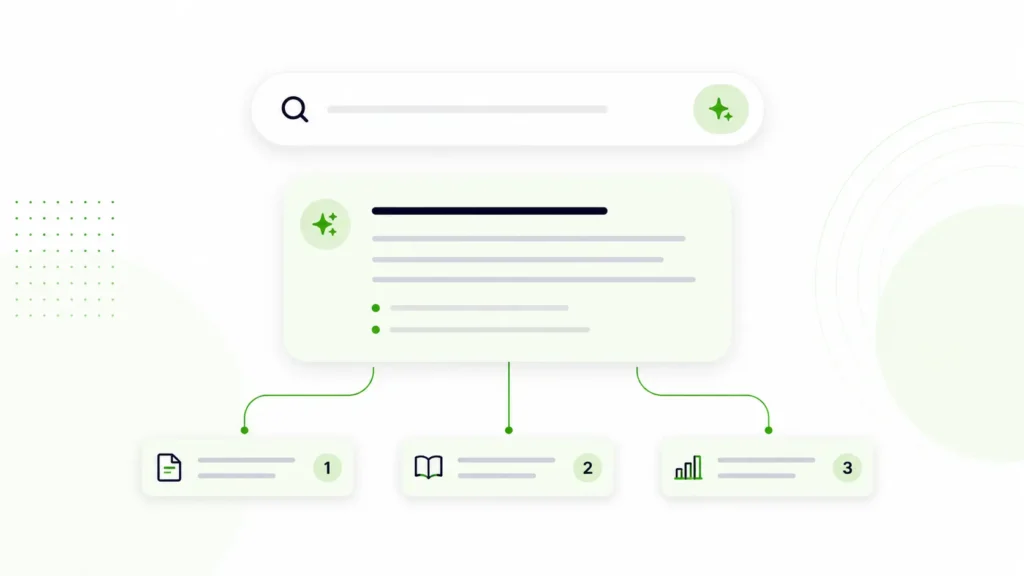
When someone asks ChatGPT a question, the model does not simply look up the top Google result. It generates fan-out queries, which are sub-queries to gather information from multiple sources before synthesizing an answer.
A single user prompt like “best project management tools for remote teams” might trigger five or six fan-out queries about specific features, pricing models, integration capabilities, and user reviews.
These fan-out queries are the real unit of content opportunity in AI search optimization. And they are often invisible to traditional keyword research.
AirOps’ analysis of 16,851 queries found that 95% of fan-out queries had zero monthly search volume. They don’t show up in Ahrefs. They don’t appear in Semrush. No keyword tool on the market can surface them, because humans don’t type them into Google. AI engines generate them internally.
The downstream effect is stark. Of the 353,799 pages ChatGPT retrieved during the study, 85% were never cited in the final answer.
Getting retrieved is not the same as getting cited. A page can appear in the model’s research process and still be ignored when the answer is assembled. One-third of the pages that did get cited came from fan-out queries, not from the user’s original prompt.
Think about what that means for your editorial calendar. You are building content plans around keywords that have measurable volume. The queries actually driving AI citations have no volume at all. Your planning process cannot find them. Every month, you prioritize content based on data that maps to traditional search behavior and systematically misses the queries that determine whether AI engines retrieve and cite your content.
You are planning what to create using a methodology designed for a different channel. The planning process is the problem, regardless of content quality.
What AI search content planning actually requires
If keyword volume cannot guide your AI search content plan, what can?
The answer is citation breadth across a topic cluster. Instead of optimizing individual pages for individual keywords, you need to map the full range of questions AI engines are synthesizing answers for in your category, then identify where you have gaps.
Kevin Indig’s research on how AI picks its sources analyzed 21,482 ChatGPT citation rows across 670 unique domains. The concentration pattern is clear: the top 10 domains in a topic hold 46% of all citations. The top 30 hold 67%. Citation reach (the number of distinct prompts your domain answers) is a more useful metric than raw citation count. A single page cited 50 times matters less than 30 pages each cited in a different prompt context.
For B2B SaaS companies, the math is encouraging. In fragmented verticals like CRM and SaaS, a focused strategy of 30 to 50 pages can realistically compete with the top cited domains. You do not need thousands of pages. You need the right pages answering the right sub-questions.
The planning unit shifts from “keyword” to “query cluster.” Instead of asking “what keywords have volume?” you ask “what questions is AI synthesizing answers for in my category, and which sub-questions am I not answering?” A query cluster includes the top-level question a user might ask an AI engine, the fan-out sub-queries the engine generates, and the specific angles and evidence types the engine pulls into its answer.
There is another layer of complexity to account for. Indig’s analysis of 3.7 million citations across ChatGPT, Perplexity, and Google AI Overviews found that 91% of citations appeared in only one engine. Only 2.37% of cited URLs showed up across all three engines for the same prompt. Each engine retrieves from largely different pools. Planning for “AI search” as a single channel is like planning for “social media” without distinguishing between LinkedIn and TikTok.
The content that travels best across engines is explanatory and helpful. Guides and tutorials had the highest cross-engine overlap at 2.3%. Brand-centric and transactional content performed worst. If you are planning content for AI search visibility, the editorial direction is toward depth, specificity, and genuine usefulness rather than promotional positioning.
Traditional SEO ranking still matters (but it is not enough)
This is not a case for abandoning keyword research.
The AirOps data includes an important counter-finding. Pages ranking #1 in Google are cited by ChatGPT at a rate of 43.2%, roughly 3.5x higher than pages ranking outside the top 20. Traditional search ranking is a strong signal that correlates with AI citations.
Ranking well gets your content retrieved. Structure and relevance to the specific fan-out query get your content cited. Both matter.
A page that ranks #1 for a broad keyword but doesn’t directly answer the fan-out sub-query will get retrieved and then ignored (which describes 85% of retrieved pages). A page that precisely answers a fan-out sub-query but has no search visibility may never get retrieved at all.
The planning implication: do not abandon keyword research. Layer AI search content planning on top of it.
The content that serves both channels targets a keyword cluster and answers the specific sub-questions AI engines generate within that cluster. When you plan an article around a keyword, also map the fan-out queries that topic generates and ensure the article addresses them directly with specific, evidence-backed answers.
A 5-step content planning process for AI search
Here is the planning methodology I use for clients who want their content cited by AI search engines, not just indexed by Google.
1. Identify the questions AI engines are answering in your category.
Start by mapping the questions AI is already answering in your space. Use AI search visibility tracking tools like AirOps or Omnia, or do it manually: type your category’s buying questions into ChatGPT, Perplexity, and Google AI Overviews. Record every question where competitors appear in the cited sources and you do not. Record the domains that do appear. Note which prompts generate citations at all versus which produce unsourced answers. The unsourced answers represent open territory.
2. Map the fan-out sub-queries for each question.
For every top-level question you identified, dig into the sub-queries AI engines generate. iPullRank’s query fan-out methodology provides a practical framework for this. Ask the AI engine a broad question, then examine what specific information it pulls to build the answer. Each piece of specific information it cites (a statistic, a comparison, a definition, a recommendation) traces back to a fan-out sub-query. Those sub-queries are your actual content opportunities.
3. Audit your existing coverage.
For each fan-out query cluster, check whether you have content that directly answers the sub-question. The standard here is strict. “We have a blog post that mentions this topic” is not coverage. “We have a section that directly answers this specific question with evidence” is. Most audits reveal that companies have broad coverage of general topics but almost no direct coverage of the specific sub-questions AI engines ask. The gaps are where the opportunity sits.
4. Prioritize by buyer intent and citation opportunity, not by volume.
Score each content gap on three criteria. First, relevance to your ICP’s buying decisions: will answering this question put you in front of someone evaluating solutions in your category? Second, fan-out query density: how many fan-out queries could this piece of content answer? A single article that addresses four or five sub-questions within a cluster is more valuable than four articles each addressing one. Third, competitive citation presence: are competitors already being cited for this question, or is it open territory?
5. Sequence for domain-level citation breadth.
Don’t publish everything at once. Build citation breadth across your topic cluster systematically. Start with the gaps where you have no coverage at all. In Indig’s data, 67% of cited URLs appeared in only one prompt, meaning most pages earn narrow, specific citation placements. You need enough pages to cover the breadth of sub-questions in your category. Once you have baseline coverage, deepen with more detailed content on high-priority clusters. The goal is to appear across the full range of prompts your buyers are asking, not to dominate a single question.
This planning methodology also improves traditional search
The content you create through this process also performs better in traditional search. When you map fan-out queries and build content around specific sub-questions, you are creating the kind of question-answering, evidence-backed content that Google’s algorithms already reward. Topical authority builds through breadth. Specific, well-structured answers earn featured snippets. Depth earns backlinks.
The investment compounds across both channels. A single article planned against a fan-out query cluster serves traditional SEO, AI search citation, and buyer trust simultaneously.
But the planning has to come first. Restructuring existing content without changing what you plan to create is optimizing the wrong unit of work. Structure and formatting are execution details. The planning decision, what to create and why, determines whether AI engines have any reason to cite the page. The briefing process, the editorial calendar, the prioritization framework: those are where AI search content strategy lives.
Most content programs I see are still running the 2019 playbook: keyword volume drives the calendar, articles are briefed against a primary keyword and two secondaries, and success is measured in rankings and traffic. That playbook produced volume without producing AI citations, and the methodology is why.
What to expect when you shift to AI search content planning
The shift from keyword-volume planning to fan-out-query planning changes results faster than most traditional SEO initiatives. AI engines do not need to recrawl and reindex your site on a months-long cycle. When ChatGPT or Perplexity generates a new answer, it pulls from whatever sources best match the fan-out query at that moment. I have seen new content start appearing in AI citations within weeks of publication.
That said, building citation breadth across a full topic cluster takes time. Expect three to six months of consistent publishing to establish your domain among the top cited sources in your category. The 30 to 50 pages needed for competitive citation breadth in a fragmented B2B SaaS vertical do not appear overnight.
The signals to watch are different from traditional SEO. Track citation reach (how many distinct prompts your domain appears in), not just citation count. Monitor which fan-out query clusters you are gaining coverage in and which remain gaps. Watch for patterns across engines: if your content is cited in Perplexity but invisible in ChatGPT, that tells you something about the format or depth the second engine requires.
The compounding effect is real. Each new page that earns citations in a query cluster strengthens your domain’s authority across adjacent clusters. The first 10 pages are the hardest. Pages 20 through 50 benefit from the citation momentum the earlier pages built.
Build a content plan that works for AI search
I help B2B SaaS and AI companies audit their existing content against AI search citation opportunities and build the editorial planning system that closes the gaps. If your content calendar is still driven by keyword volume alone, I can show you where the citation opportunities are.
Commonly asked questions about fan-out queries
How is AI search content planning different from traditional SEO content planning?
Traditional SEO planning starts with keywords that have measurable search volume. AI search planning starts with the questions AI engines are synthesizing answers for and the fan-out sub-queries they generate. 95% of those sub-queries have zero search volume, so they are invisible to traditional keyword tools. The planning unit shifts from individual keywords to query clusters, and the success metric shifts from rankings to citation breadth across prompts.
Do I need special tools to plan content for AI search?
Dedicated tools like AirOps and Omnia make the process faster, but you can start manually. Type your category’s buying questions into ChatGPT, Perplexity, and Google AI Overviews. Record which domains get cited, which sub-questions the engines generate, and where you have gaps. The methodology matters more than the tooling. iPullRank has published a practical framework for mapping fan-out queries that works without specialized software.
How long does it take to see results from AI search content planning?
AI search citation patterns shift faster than traditional SEO rankings. You are not waiting for Google to recrawl and reindex. When AI engines generate a new answer, they pull from whatever sources best match the fan-out query at that moment. I have seen new content start appearing in AI citations within weeks of publication. Building citation breadth across a full topic cluster typically takes three to six months of consistent publishing.
Should I stop doing keyword research entirely?
No. Pages ranking #1 in Google are cited by ChatGPT at 3.5x the rate of pages outside the top 20. Traditional search ranking is still a strong signal for AI citation. The recommendation is to layer AI search planning on top of keyword research, not replace it. Plan each piece of content against both a keyword target and a fan-out query cluster.
How many pages do I need to compete for AI citations in my category?
In fragmented B2B SaaS verticals, roughly 30 domains hold 67% of citations per topic. A focused strategy of 30 to 50 pages, each targeting a specific fan-out query cluster, can realistically earn a position among the top cited domains. The key is breadth: 30 pages each answering a different set of sub-questions will outperform 30 pages all covering the same general topic.