Key takeaways
- AI search optimization is the practice of structuring content so AI platforms like ChatGPT, Perplexity, Claude, and Google AI Overviews cite it in their generated answers.
- The shift requires three things from your content: a direct answer near the top, clear structure that AI can extract, and citation-worthy evidence like named examples and specific data.
- Operationally, it changes how you brief, structure, and measure content, but it does not require a larger team or budget. Most of the changes also improve content for human readers.
- For B2B SaaS companies between $2M and $20M ARR, the practical question is whether your team can absorb these changes alongside existing work. The answer is usually yes.
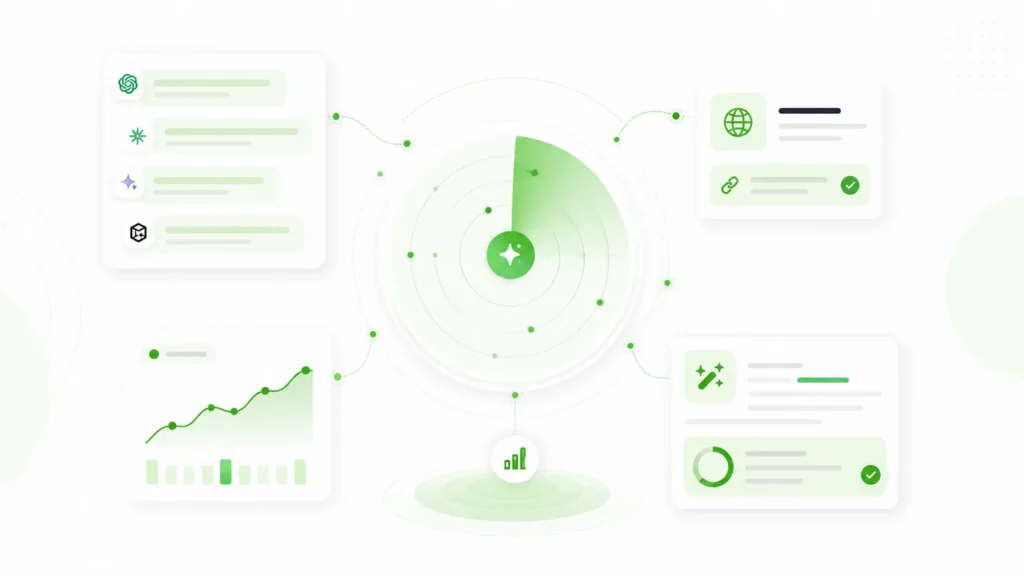
AI search optimization is the practice of structuring content so AI platforms like ChatGPT, Claude, Perplexity, and Google AI Overviews can find, understand, and cite it in their responses.
It differs from traditional SEO because AI engines do not rank pages in a list. They synthesize answers from sources they consider clear, structured, and authoritative.
For B2B SaaS companies, this means content needs to answer specific questions directly, use structured formatting that AI can parse, and establish enough authority through evidence and attribution that AI systems choose to cite it.
The operational shift is real but manageable: it changes how you brief, structure, and measure content. Here’s what you need to know on what AI search optimization asks of a content program, what changes day to day, and how to evaluate whether the investment makes sense for B2B SaaS and technology companies.
What AI search optimization actually means
You have probably seen the terms GEO (generative engine optimization) and AEO (answer engine optimization) floating around LinkedIn. They all describe the same shift: optimizing content for AI-powered answer engines instead of traditional search result pages.
I use “AI search optimization” because it is the most self-explanatory label. The practice covers any work that makes your content more likely to be retrieved, understood, and cited by AI systems that generate answers from web sources.
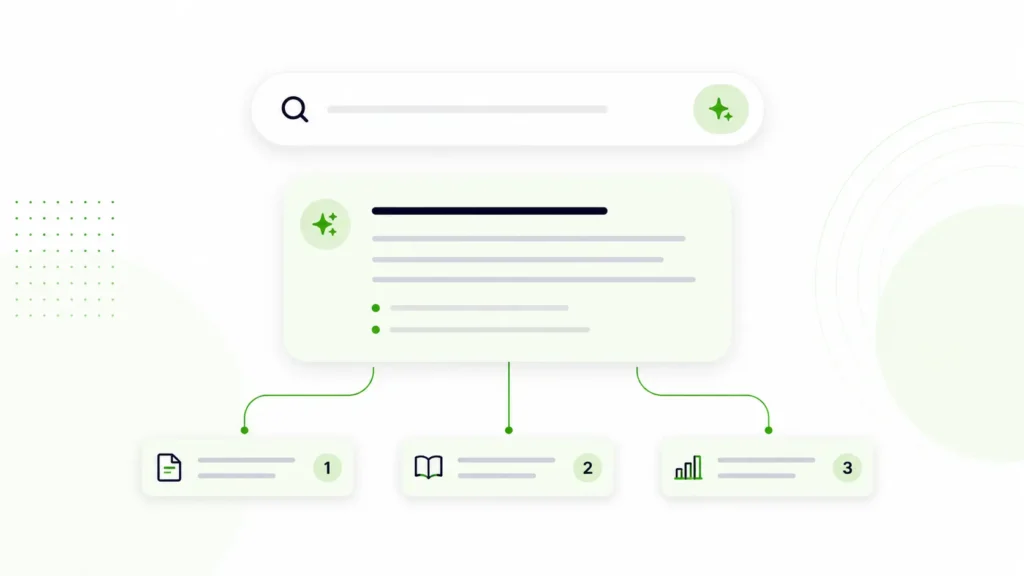
The mechanics are straightforward. AI answer engines use a process called retrieval-augmented generation (RAG). When a user asks a question, the system searches for relevant content, pulls it into context, and synthesizes a response that cites its sources. Your content either makes it into that context window or it does not.
The scale of this shift is already measurable. ChatGPT has over 300 million weekly users and processes 37.5 million daily searches. Perplexity handles more than 100 million queries per week. Google’s AI Overviews now appear in 13% to 16% of US search results. And 34% of US adults have used ChatGPT, roughly double the figure from 2023 according to Pew Research Center.
Your buyers are already using these tools. The question is whether they find your content or your competitor’s.
How does AI search optimization differ from traditional SEO?
Traditional SEO optimizes for a position in a ranked list. You write a page, target a keyword, build links, and try to appear on page one. The user clicks through to your site, and your analytics track the visit.
AI search optimization operates on different logic. There is no page one. The AI engine reads dozens of sources and produces a single synthesized answer. Your content might be cited as a source, mentioned by name, or ignored entirely. The user often gets what they need without clicking through to any website.
This distinction matters for how content teams work. Roughly 60% of Google searches already end without a click, according to Search Engine Land. When AI Overviews appear, average click-through rates drop by 15.49% based on Amsive’s analysis of 700,000 keywords across five industries.
But the traffic that does come through AI engines converts at a higher rate. Amsive’s first-party data shows LLM-driven traffic converting at 3.76% versus 1.19% for organic in insurance, and 5.535 versus 3.75% in ecommerce. Fewer clicks, but better ones.
For a content team, this means the job shifts from “rank for this keyword” to “be the source this AI engine cites when someone asks this question.” That is a different content brief, a different structure, and a different success metric.
What does AI search optimization require of your content?
Three things change in how content gets written.
Lead with a direct answer. AI engines need to find a clear, citable response to the question your content addresses. That means putting a concise answer (roughly 40 to 60 words, as TripleDart’s analysis suggests) in the opening paragraph, not burying it after 500 words of context-setting. Think of it as writing the paragraph that an AI would want to quote.
Structure for extraction. AI systems parse content by sections. Clear headings that match the questions your audience asks, short paragraphs, and logical section breaks all make it easier for an AI engine to pull relevant information. This is not about gaming an algorithm. It is about writing content that is organized enough for a machine to understand what each section covers. For a detailed walkthrough of how to apply this to blog posts specifically, see my guide on how to structure blog posts for AI search citations.
Build citation-worthiness through evidence. AI engines prefer sources that demonstrate authority. Named examples, specific data points, attributed quotes, and original analysis all signal that your content is worth citing. A 2,000-word post full of generic advice gets passed over. A post that names companies, cites research, and provides specific numbers earns citations.
Consider what this looks like in practice. A typical SaaS blog post might open with a paragraph about industry trends, move through several hundred words of background, and eventually reach a useful insight in the second half. An AI-optimized version of that same post would open with the useful insight, organize subsequent sections around specific questions a reader might ask, and support every claim with named sources or data.
One example from Profound’s research: a remote staffing company went from 0% to 11% AI visibility after optimizing a single content piece. The changes were structural, not strategic. Same topic, same audience, better organization and evidence.
What changes operationally when you invest in AI search optimization?
AI search optimization changes four things about how your existing content operations work.
- Content briefs include question-level targeting. Instead of assigning a keyword to a brief, you assign a set of questions your content should answer directly. The brief specifies what the opening answer paragraph should cover and which questions each section addresses. This changes how writers approach a piece from the first sentence.
- Content structure follows extraction logic. Headings become questions or direct labels for what follows. Sections get shorter and more self-contained, because an AI engine might pull a single section rather than referencing the full page. Schema markup and structured data become part of the production process, not an afterthought.
- Measurement expands beyond rankings and traffic. You start tracking AI visibility: how often your brand gets mentioned or cited in AI-generated responses, which queries trigger citations, and which content pieces are earning them. For a breakdown of how to set up this tracking, see my post on AI brand visibility tracking for B2B SaaS. Tools for this are still maturing, but the metric itself becomes part of your content reporting.
- Content evaluation criteria shift. When you audit existing content, you are no longer just checking keyword coverage and backlinks. You are asking whether each piece answers a question directly in its opening, whether it uses structured formatting an AI can parse, and whether it provides enough evidence to be worth citing. This changes which content you prioritize for updates.
None of these changes require a larger team or a bigger budget. They require different habits in how content gets planned and produced.
How do you evaluate whether it is worth the investment?
The answer depends on where your content program sits today.
If your team already writes content that answers specific questions, uses clear structure, and supports claims with evidence, the incremental effort of AI search optimization is small. You are mostly adding measurement, refining opening paragraphs, and being more deliberate about structure. For a team like this, the cost is a few hours per week of adjusted process.
If your content program is built around keyword volume, producing high quantities of generic posts designed to rank for broad terms, the shift is larger. Your content needs reworking at the level of structure and evidence. But that reworking would make your content better for human readers too. AI search optimization becomes the forcing function that fixes a content program that was already underperforming on engagement and conversion.
The data supports the direction. TripleDart’s analysis across roughly 100 SaaS brands showed a 47% increase in LLM-driven traffic in April. That growth is accelerating. And the examples of smaller brands outperforming larger ones are real. Profound’s research found that eatthis.com outranked Forbes in fast-food-related AI search responses. In AI search, authority comes from content quality and structure, not domain size.
For a B2B SaaS company at $2M to $20M ARR, the practical question is whether your team can absorb these changes alongside what it is already doing. The answer is usually yes, because the changes improve content quality across all channels, not just AI search. If you’re short on headcount, a fractional head of content can own the transition without adding a full-time role.
Where AI search optimization is heading
The measurement tools are still catching up. Tracking AI visibility across ChatGPT, Perplexity, Google AI Overviews, and other platforms is possible but not yet standardized. Benchmarks for what “good” looks like in B2B SaaS are thin. Google has called AI Mode “the future of search,” and adoption data supports that claim, but the specifics of how AI engines weight different signals will keep shifting.
Here’s what I think matters more than the platform mechanics: every change that AI search optimization asks you to make also makes your content better for the human reading it. Answering questions directly, structuring content clearly, supporting claims with evidence. These are not tricks for gaming an algorithm. They are the basics of useful writing that most content programs skip in the rush to publish.
If AI search evolves in a direction nobody predicts, content that is clear, structured, and evidence-based still wins. That is what makes this a low-risk investment. You are upgrading how your content works, and the improvements hold regardless of which platforms dominate.
Get your company cited by AI search
I help B2B SaaS and technology companies build AI search-ready content programs. If you want me to build yours, book a free consultation.
Common questions about AI search optimization
How is AI search optimization different from AEO and GEO?
The terms are mostly interchangeable. GEO (generative engine optimization) emphasizes content for generative AI tools like ChatGPT. AEO (answer engine optimization) emphasizes content for direct-answer engines like Google AI Overviews. AI search optimization covers both. The practical work is the same regardless of which acronym you use.
How long does it take to see results from AI search optimization?
For retrieval-based engines like Perplexity and Google AI Overviews, optimized content can appear in citations within weeks. For ChatGPT, which relies more on training data and brand authority, results take longer (typically months) because citation depends on cumulative signals rather than individual page changes.
Do you need a separate tool to track AI search performance?
Not initially. Manual prompt testing across ChatGPT, Perplexity, and Google AI Overviews gives you enough signal to start. Tools like Profound and Peec become useful once you are tracking visibility across hundreds of queries or comparing against competitors at scale. Most B2B SaaS teams under $20M ARR can start manually and add tools later.
Can you do AI search optimization without traditional SEO?
No. AI engines retrieve from indexed web content, which means traditional SEO fundamentals (indexability, crawlability, technical health) are the floor. AI search optimization adds structural and evidence-based optimizations on top of that foundation, but it does not replace it.
Will AI search optimization eventually replace SEO?
Probably not. AI engines pull from the same indexed content traditional search pulls from. The work overlaps significantly. What is changing is which content gets surfaced and how. SEO and AI search optimization are converging into a single discipline, not separating into different ones.