Key takeaways
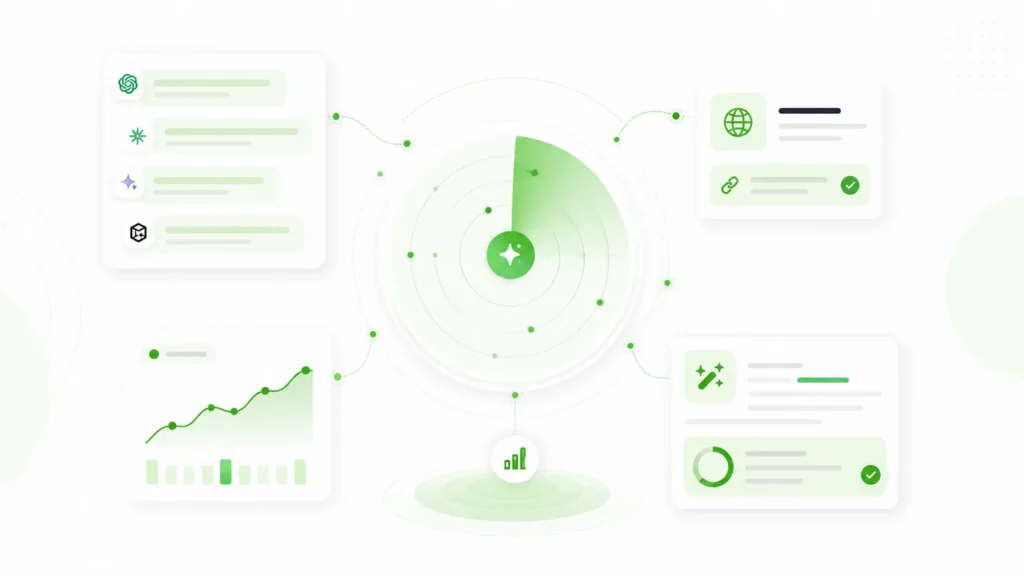
- AI brand visibility tracking means monitoring whether tools like ChatGPT, Perplexity, and Google AI Mode mention, cite, or recommend your company when buyers ask questions your product answers.
- Single prompt checks are unreliable because AI-generated answers vary across runs. Tracking requires repeated measurements at a consistent cadence.
- The tracking itself is operationally simple, but most B2B SaaS teams stop at the dashboard and never connect visibility data to specific content decisions
- A practical tracking system uses a fixed prompt set, weekly measurement cadence, simple scoring method, and decision framework that feeds directly into content briefs.
Most B2B SaaS and technology teams will soon have some kind of AI visibility dashboard.
Fewer will know what to do with it.
According to a CommonMind survey, 93% of B2B SaaS marketers say AI search visibility is critically important, yet only 14% have a mature strategy to address it.
That is the real problem. Tracking whether ChatGPT, Perplexity, Claude, or Google AI Mode mentions your brand is useful only if the data changes what your content team creates, updates, or prioritizes next. Otherwise, AI visibility becomes another reporting tab nobody acts on.
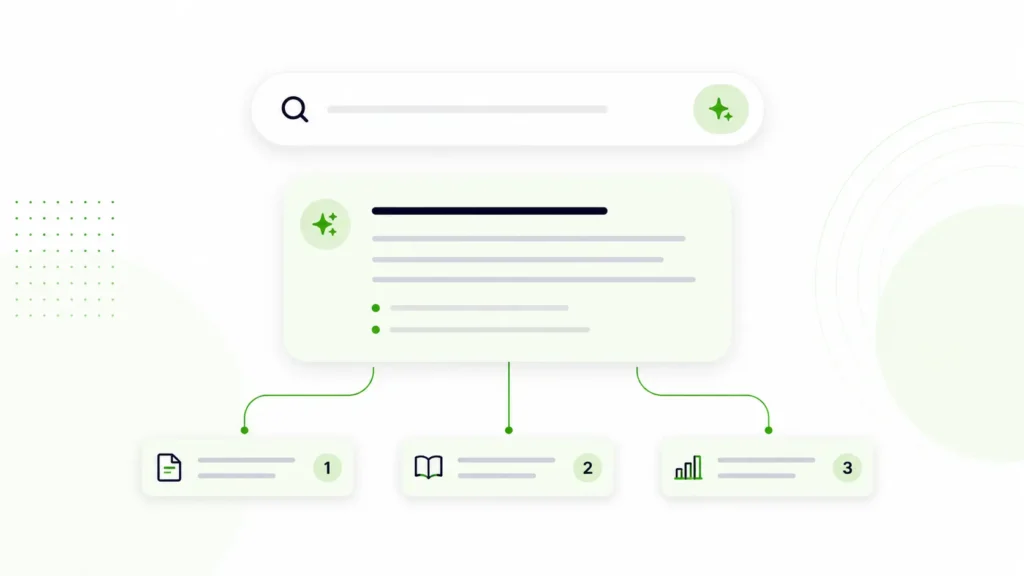
AI brand visibility tracking means monitoring how often AI search engines mention, cite, or recommend your company when buyers ask questions your product answers. For B2B SaaS teams, the work involves running a consistent set of prompts across platforms, recording whether your brand appears, and using the results to prioritize content.
The tracking itself is straightforward. The harder part is building a process that turns visibility data into editorial decisions on a regular cadence. Here is how to build that system.
What is AI brand visibility tracking?
AI brand visibility tracking is the practice of systematically checking whether AI search engines include your brand in their generated answers.
It requires different metrics and methods than traditional SEO tracking because you are not measuring position on a search results page. You are measuring whether your brand appears inside generated answers.
Three signals matter:
| Signal | What it means |
|---|---|
| Mention | The AI engine names your brand. |
| Citation | The AI engine links to your content as a source. |
| Recommendation | The AI engine positions your product as a solution the buyer should evaluate. |
Each signal tells you something different.
A mention without a citation means the model may know your brand exists, but it is not relying on your content as a source. A citation without a recommendation means your content is useful, but your product is not being positioned as a contender. A recommendation is the strongest signal because it means your brand has entered the buyer’s consideration set.
The scale of this shift is already measurable. First Page Sage’s Q2 2026 estimate puts ChatGPT at roughly 17% of all digital queries, up from single digits in 2024. Nobori’s AI search statistics roundup reports that AI platform visits grew 28.6% from January 2025 to January 2026. Meanwhile, Column Five reports that 25% of B2B buyers now use generative AI over traditional search for vendor research.
For B2B SaaS teams, this matters because more buyers are using AI tools during research. They are asking questions like:
- What are the best tools for customer onboarding?
- Which project management platforms are best for remote teams?
- What is the best CRM for a Series B SaaS company?
- How should a B2B SaaS company measure content ROI?
If your product answers those questions, but AI engines never mention you, your brand is missing from an increasingly important discovery path.
Why one-off prompt checks are misleading
The most common mistake in AI visibility tracking is checking a prompt once and treating the result as truth.
If ChatGPT mentions your brand once, that does not mean you have strong visibility. If it does not mention you once, that does not mean you are invisible. AI-generated answers vary across runs, even when the prompt is the same.
That means a single prompt check is too noisy to guide content strategy.
You need repeated measurements. The goal is not to know whether your brand appeared one time. The goal is to understand whether your brand appears consistently enough to count as a pattern.
The same applies across platforms. Your brand might appear in Perplexity but not in ChatGPT. You might be cited in Google AI Mode but only mentioned elsewhere. Single-platform tracking gives you a partial picture.
A useful tracking system needs to answer three questions:
- Are we appearing for the prompts that matter?
- Are we being cited or merely mentioned?
- What content action should we take next?
That third question is the one most teams skip.
What actually drives AI brand visibility?
AI visibility is not only a function of how much content you publish on your own site.
Publishing volume can help you cover more topics, but AI engines also look for signals beyond your blog. They draw from third-party mentions, trusted sources, comparison pages, review sites, partner content, media coverage, YouTube, and other places where your brand appears in context.
For B2B SaaS teams, that creates two practical implications.
First, your owned content still matters, but it cannot carry the whole job alone. If no one else on the web talks about your company, AI engines have fewer external signals to use when deciding whether to include you. Walker Sands’ B2B AI Search Visibility Benchmark found that brands with strong third-party presence across review sites, media coverage, and partner mentions scored higher in AI-generated recommendations than brands relying on owned content alone.
Second, your content needs to be easy for AI systems to interpret. Pages that answer questions clearly, use descriptive headings, include specific evidence, and explain who the product is for are more useful than broad thought leadership pieces that stay abstract. For a deeper look at how to structure individual posts for AI citation, see structured content for AI citation.
In other words, AI visibility is shaped by both authority and answer quality. You need enough external validation for AI engines to recognize your brand, and enough structured content for them to understand when to cite or recommend you.
How to build a practical AI visibility tracking system
Start with 20 to 30 prompts that match the questions your buyers actually ask during research. Focus on category and problem-aware prompts, not branded prompts.
A branded prompt like this is useful, but limited:
Is [your company] a good customer onboarding tool?
A category prompt is more valuable:
What are the best customer onboarding tools for B2B SaaS companies?
The category prompt tells you whether AI engines recommend you when the buyer has not already decided to evaluate your company. Good prompt sources include:
- Sales call transcripts
- Demo questions
- Support tickets
- Customer interviews
- Keyword research
- Competitor comparison queries
- Product category searches
- Jobs-to-be-done research
Group your prompts by topic so you can spot patterns.
| Topic | Example prompt |
|---|---|
| Category | What are the best tools for customer onboarding? |
| Use case | How can a SaaS company reduce churn during onboarding? |
| Comparison | What are the best alternatives to [competitor]? |
| Buying criteria | What should I look for in customer success software? |
| Industry-specific | Best onboarding software for healthcare SaaS companies |
This grouping matters because one isolated prompt does not tell you much. But if you are absent across an entire topic cluster, that is a clear content gap.
2. Set your measurement cadence
Measure at least weekly. For each prompt, run multiple checks across your priority platforms. Track the following at minimum:
- ChatGPT
- Claude
- Perplexity
- Google AI Mode
For each platform, record the date, prompt, answer outcome, and any cited URLs.
You do not need an expensive tool to start. A spreadsheet is enough for the first version.
Your columns might look like this:
| Date | Prompt | Topic | Platform | Outcome | Cited URL | Notes |
|---|---|---|---|---|---|---|
| May 18 | Best onboarding tools for B2B SaaS | Category | ChatGPT | Mentioned | None | Named but not recommended |
| May 18 | Best onboarding tools for B2B SaaS | Category | Perplexity | Cited | Blog post URL | Cited guide, not product page |
| May 18 | Best onboarding tools for B2B SaaS | Category | Google AI Mode | Absent | None | Competitors surfaced |
The goal is not perfect measurement. The goal is enough consistency to identify useful patterns.
3. Score each prompt
For each prompt on each platform, record one of four outcomes:
| Score | Outcome | Meaning |
|---|---|---|
| 3 | Recommended | Your brand is positioned as a solution to evaluate. |
| 2 | Cited | Your content is linked as a source. |
| 1 | Mentioned | Your brand is named but not linked or recommended. |
| 0 | Absent | Your brand does not appear. |
Over time, calculate the percentage of runs where your brand appears in each category. For example, if you run a prompt five times and your brand appears twice, you have 40% visibility for that prompt on that platform.
But do not stop at the score. The score is only useful because it tells you what to do next.
4. Connect visibility scores to content actions
This step is where AI visibility tracking becomes useful.
Most teams stop at the dashboard. They check whether visibility went up or down, maybe share a screenshot in Slack, and move on. That is not a strategy.
A better system maps each tracking outcome to a specific content decision.
| Tracking result | What it means | Content action |
|---|---|---|
| Brand absent | AI engines do not associate you with the query. | Create or rebuild content around that question. |
| Mentioned but not cited | The model knows your brand but is not sourcing your content. | Add clearer answers, stronger evidence, and better structure. |
| Cited but not recommended | Your content is useful, but your product positioning is weak. | Add use cases, product-fit language, comparisons, and buying criteria. |
| Recommended inconsistently | You are in the consideration set, but visibility is unstable. | Strengthen supporting content and third-party validation. |
| Recommended consistently | You own the prompt today. | Refresh and protect the content. |
This framework turns AI visibility data into an editorial input. Instead of asking, “Did our visibility improve?” the better question is:
What should we create, update, or promote because of what we learned?
How this works in practice
Say you run this prompt:
What is the best customer onboarding software for B2B SaaS companies?
You test it across ChatGPT, Perplexity, and Google AI Mode. The results look like this:
| Platform | Result |
|---|---|
| ChatGPT | Your brand is mentioned once, but not cited. |
| Perplexity | Your onboarding guide is cited, but your product is not recommended. |
| Google AI Mode | Your brand is absent. |
That gives you three different content actions.
For ChatGPT, the model knows the brand but does not have a strong enough source to cite. You may need to restructure the relevant page with a clearer answer, stronger proof points, and more specific headings.
For Perplexity, your content is useful, but it is not doing enough to position your product. You may need to add product-fit sections, use cases, comparison points, or examples that connect the educational content to your solution.
For Google AI Mode, you may need a new page targeting the query more directly, plus stronger off-site validation through reviews, partner mentions, or third-party comparisons.
The point is not that one prompt gives you the entire strategy. The point is that repeated prompt tracking shows you where your content system is weak.
What to do when your brand is absent
If your brand is absent for a high-priority prompt, you probably have one of three problems:
- You do not have content that directly answers the question.
- Your content exists, but the answer is buried or unclear.
- Your brand lacks enough external validation around that topic.
The content action depends on which problem you find.
If you do not have content, create a new page or article targeting the question directly.
If the content exists but is weak, restructure it. Put the direct answer near the top. Use descriptive headings. Add examples, data, screenshots, comparison points, and clear product-fit language.
If the issue is external validation, owned content alone may not be enough. You may need partner content, review site presence, podcast appearances, YouTube mentions, guest posts, analyst mentions, or inclusion in third-party roundups.
What to do when your brand is mentioned but not cited
A mention means the model recognizes your brand. That is good, but it is not enough.
If your brand is mentioned but your content is not cited, the likely issue is that your site does not provide the best source for the answer. The model may know your company exists, but it is pulling information from somewhere else.
To improve your chances of being cited, update the relevant content with:
- A direct answer to the target question
- Clear definitions
- Specific examples
- Original data or proprietary insights
- Product screenshots or workflows
- Comparison tables
- Descriptive headings
- Short, self-contained sections
- Clear publication and update dates
The goal is to make your page the easiest credible source for the AI engine to use.
What to do when your content is cited but your brand is not recommended
Getting cited but not recommended is a common problem for B2B SaaS content. Your educational content may be strong enough to cite, but too neutral to help you enter the consideration set. That usually happens when the content explains the problem but does not clearly connect the problem to your product.
To fix this, add sections that answer:
- Who is this product best for?
- What use cases does it support?
- What buying criteria should the reader consider?
- How does this approach compare with alternatives?
- Where does your product fit into the workflow?
- What proof supports your positioning?
This does not mean turning every blog post into a sales page. It means making the commercial relevance clear enough that AI engines can understand when your product belongs in the answer.
What to do when your brand is consistently recommended
If AI engines consistently recommend your brand for a valuable prompt, protect that visibility. Do not treat the content as finished.
Set a refresh cadence. For fast-moving topics, review the content quarterly. For more stable topics, review it twice a year.
Look for:
- Outdated examples
- Old screenshots
- Missing competitors
- Changed pricing or packaging
- Weak internal links
- New customer proof
- Better data
- New third-party mentions
Visibility can decay if the content becomes stale or competitors publish stronger assets. The goal is not just to win visibility once. The goal is to maintain it.
Tools vs. manual tracking
Most B2B SaaS teams should start with manual tracking.
If you are tracking 20 to 30 prompts across three platforms once a week, a spreadsheet is enough. The process will take a couple of hours per week and will teach you what patterns to look for before you buy software.
Manual tracking works well when:
- You are building your first baseline
- You have fewer than 50 prompts
- You do not need daily monitoring
- You are still figuring out which prompts matter
- You want the content team close to the data
Tools become more useful when:
- You need to track more than 50 prompts
- You want daily or automated checks
- You need competitor benchmarking
- You report visibility trends to leadership
- You need exports, alerts, or dashboards
- You manage multiple products or regions
When evaluating tools, look for four capabilities:
- Multi-platform tracking
- Repeated measurements
- Prompt grouping by topic
- Exportable data your team will actually use
Do not buy a tool just because the dashboard looks polished. Buy one when the manual process starts limiting your ability to make decisions.
Why baseline data matters
AI visibility tracking gets more useful over time. The first week tells you where you stand. The first month shows patterns. The first quarter shows whether your content changes are moving visibility.
That historical baseline is valuable because AI visibility is not static. Prompts change. Platforms change. Competitors publish new content. Models cite different sources. Your own site evolves.
Without baseline data, you cannot tell whether a content update improved visibility or whether the result was random.
With baseline data, you can start asking better questions:
- Which prompts improved after we updated content?
- Which platforms cite us most often?
- Which competitors appear where we do not?
- Which pages get cited repeatedly?
- Which topics are weak across every platform?
- Which updates had no impact?
That is when AI visibility tracking becomes part of content strategy instead of just another measurement exercise.
Start with a four-week tracking sprint
You do not need a full GEO program to start. Start with a four-week sprint.
Pick 20 prompts. Run them across ChatGPT, Perplexity, and Google AI Mode. Score the results as absent, mentioned, cited, or recommended. Review the patterns once a week.
At the end of four weeks, identify:
- The prompts where you are absent
- The prompts where you are mentioned but not cited
- The prompts where you are cited but not recommended
- The prompts where competitors consistently appear
- The pages most likely to improve visibility if updated
That gives you a practical content roadmap, rather than just a dashboard.
Get your company cited by AI search
I help B2B SaaS and technology companies turn AI visibility data into content programs that earn mentions, citations, and recommendations in AI search. If you want a practical tracking system and editorial roadmap, book a free consultation.
Frequently asked questions on AI brand visibility
How many prompts should I track for AI brand visibility?
Start with 20 to 30 prompts that match the questions your buyers actually ask during their research process. Focus on category and problem-aware queries, not branded queries. These reveal whether AI engines recommend you when the buyer has not already decided to evaluate your company.
How often should I measure AI brand visibility?
Weekly is a practical starting point. Run the same prompts across the same platforms on a consistent cadence so you can identify patterns over time.
Which AI search platforms should I track?
At minimum, track ChatGPT, Perplexity, and Google AI Mode. Each platform generates answers differently, so your visibility can vary across them.
Can I track AI brand visibility without paid tools?
Yes. For 20 to 30 prompts, manual tracking in a spreadsheet is enough. Record the prompt, platform, date, outcome, cited URL, and notes. Tools become useful when you need more prompts, daily monitoring, competitor benchmarks, or leadership reporting.
What is a good AI brand visibility score for B2B SaaS?
Benchmarks are still forming, so your own trendline matters more than a generic score. Track visibility over time and measure whether specific content changes improve mentions, citations, and recommendations for priority prompts.